
Renovation debris piles up fast drywall dust, old fixtures, lumber scraps, concrete chunks. But disposing of it doesn’t have to be a nightmare. Renovation debris disposal in Toronto involves five main methods: City of Toronto curbside pickup (free for some items), municipal drop-off depots, bin rentals, professional junk removal services, or donation to reuse centers. The right choice depends on your debris type, timeline, budget, and how much you have.
This guide walks you through every option, material-specific disposal rules, and hidden costs so you can clear your property fast and responsibly.
Your Fastest Path Forward
Need it gone TODAY? Junk removal services (same-day availability, they do all the lifting).
Have a few days? Bin rental (flexible, transparent pricing, you control the timeline).
On a tight budget? City curbside pickup or drop-off depots (free to minimal cost).
Want to help others + save money? Donation centers (Habitat ReStore, Goodwill, salvage yards).
Five Ways to Dispose of Renovation Debris in Toronto
1. City of Toronto Curbside Oversized Items Pickup
What it is: The City of Toronto collects eligible oversized and metal items through its scheduled curbside collection service.
Items accepted: Furniture, mattresses, metal appliances, bed frames, hot water heaters, bicycles, old garbage cans, and artificial Christmas trees (when stripped).
Items NOT accepted: Construction, demolition, and renovation waste, including drywall, lumber, concrete, roofing shingles, tiles, insulation, doors, cabinets, and countertops.
Cost: An annual fee may apply depending on the property type and municipal collection program.
Timeline: Collection takes place according to your scheduled garbage collection day.
Pros: Convenient for eligible oversized items, no need to transport them, and the City manages collection.
Cons: Does not accept most construction debris, follows a scheduled collection system, and is unsuitable for bulk renovation waste.
Best for: Homeowners replacing appliances or old furniture during renovations, rather than disposing of construction debris.
How to use: Check the City of Toronto’s collection guidelines, place eligible items in the designated area, and contact 311 if you need clarification about pickup requirements.
2. City of Toronto Drop-Off Depots
What it is: Municipal drop-off facilities where Toronto residents can transport eligible renovation debris and dispose of it according to local guidelines.
Items accepted: Certain construction materials, such as drywall, lumber, concrete, roofing shingles, tiles, plaster, insulation, yard waste, metal, cardboard, and some appliances, depending on depot rules.
Items NOT accepted: Some hazardous materials and restricted waste may require special handling or designated disposal facilities.
Cost: Many eligible materials can be dropped off at little or no cost, depending on the material, quantity, and applicable municipal rules.
Timeline: Self-service during designated depot hours.
Pros: Can be an affordable disposal option, offers flexible drop-off times, and allows residents to manage their own loads.
Cons: You must transport and unload the debris yourself. Large renovation projects may require multiple trips, and vehicle capacity can limit how much you can dispose of.
Best for: Small-to-medium renovation projects, DIY homeowners with suitable vehicles, and residents looking to reduce disposal costs.
How to use: Check the City of Toronto’s drop-off depot guidelines or call 311 to confirm accepted materials, fees, and operating hours. Load your vehicle, visit the appropriate depot, and unload materials into designated areas.
3. Bin Rental (Dumpster Rental)
What it is: A bin rental service delivers a dumpster to your property, allowing you to load renovation debris over an agreed rental period. The bin is collected once you’re finished.
Items accepted: Depending on the bin provider and disposal restrictions, accepted materials may include drywall, lumber, concrete, metal, roofing materials, fixtures, flooring, carpet, and other renovation waste.
Cost: Pricing varies based on bin size, rental duration, debris type, weight, and delivery location.
Timeline: Rental periods vary, allowing you to load debris according to your renovation schedule.
Pros: Convenient for on-site disposal, accommodates larger volumes, offers flexible loading time, and can provide a predictable disposal budget.
Cons: The bin takes up driveway or curb space, you handle all the loading, and additional fees may apply for excess weight or rental time. A municipal permit may be required for placement on public property.
Best for: Medium-to-large renovation projects, homeowners who can load debris themselves, and DIY renovations generating waste over several days.
How to use: Choose a bin size, request a quote, arrange delivery, load your renovation debris, and schedule pickup according to the rental agreement.
Live Load Option: Some bin providers offer live loading, where a truck arrives and waits while you load the debris. This can be useful for properties with limited driveway space or tight downtown access. Availability, loading time, and pricing vary by provider.
4. Professional Junk Removal Services
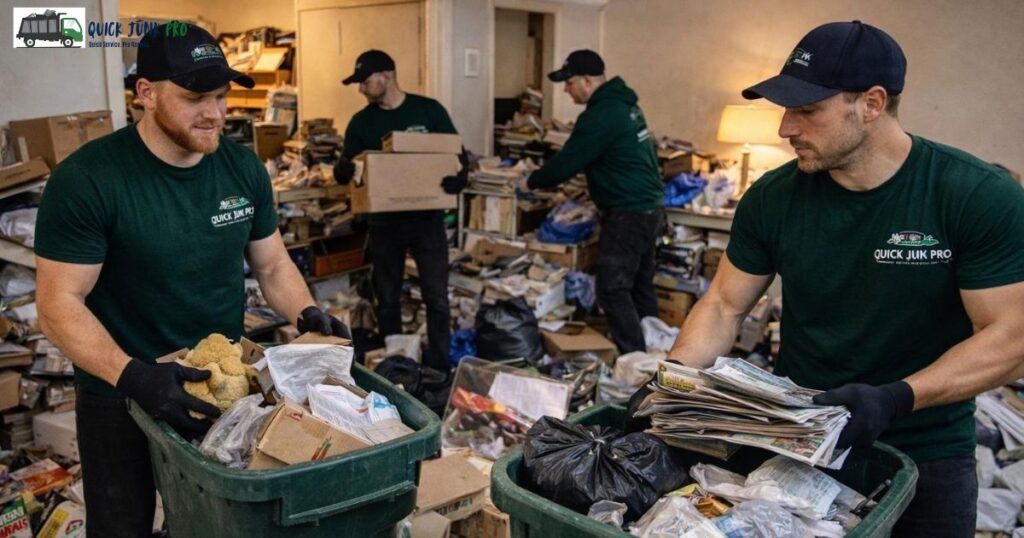
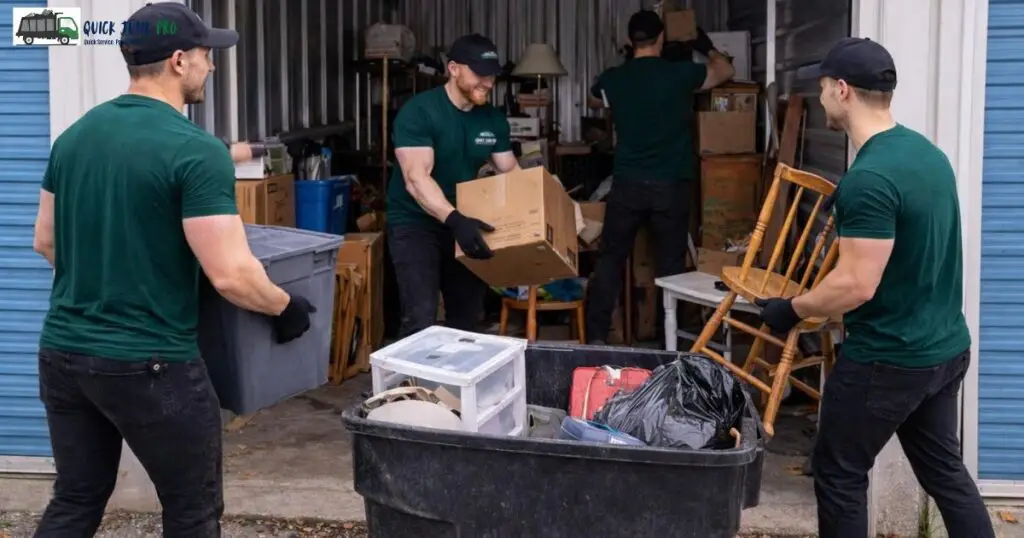
What it is: Professional junk removal services provide a convenient way to clear renovation debris without handling all the heavy lifting yourself. Quick Junk Pro offers junk removal solutions for homeowners looking to clear unwanted materials and reclaim their space.
Items accepted: Depending on the material and disposal regulations, removal services may handle renovation debris, furniture, appliances, fixtures, and other unwanted items. Certain hazardous or restricted materials may require specialized disposal.
Cost: Pricing depends on the volume, material type, weight, accessibility, and service requirements. Request a quote from Quick Junk Pro for your renovation cleanup needs.
Timeline: Quick Junk Pro offers flexible scheduling, with same-day or next-day availability depending on location and booking time.
Pros: Convenient, reduces physical labour, saves time, and eliminates the need to transport debris yourself. Quick Junk Pro helps simplify renovation cleanup by handling the removal and hauling of accepted items.
Cons: Professional removal may cost more than handling disposal yourself. Pricing depends on the size and type of debris, and certain materials may not be accepted.
Best for: Homeowners with large renovation projects, busy schedules, heavy debris, or limited ability to load and transport unwanted materials.
How to use: Contact Quick Junk Pro through to describe your renovation debris and request a quote. Share photos or details about the materials, confirm service availability and pricing, and schedule a convenient pickup.
5. Donation & Reuse Centers
What it is: Donation and salvage centers accept certain reusable renovation materials for resale, redistribution, or community reuse.
Items accepted: Reusable kitchen cabinets, intact countertops, working appliances, doors, windows, flooring, fixtures, and quality furniture, depending on the organization’s guidelines.
Items NOT accepted: Damaged goods, hazardous materials, and heavy construction waste such as concrete or drywall are generally unsuitable for donation.
Cost: Donations may be free to drop off, while pickup availability and any associated fees vary by organization.
Timeline: Varies depending on the center’s acceptance policies, appointment availability, and pickup arrangements.
Pros: Gives usable materials a second life, reduces landfill waste, supports community reuse, and may help lower disposal costs.
Cons: Only suitable for reusable items in acceptable condition. Donation centers may have strict acceptance criteria, and bulk renovation debris still requires another disposal method.
Best for: Homeowners replacing usable fixtures, appliances, cabinets, or quality materials who want to reduce waste and support reuse.
How to use: Contact a local donation or salvage center to confirm which materials it accepts. Provide details or photos, check pickup or drop-off requirements, and arrange a suitable time. For remaining renovation debris, Quick Junk Pro can help with the removal of accepted unwanted materials.
Comparison Table: Method at a Glance
| Method | Speed | Effort | Best For |
| City Curbside | Weekly schedule | None | Oversized items only; not construction debris |
| City Drop-Off | Flexible; self-drive | High (you load/transport) | Small-to-medium DIY jobs |
| Bin Rental | 3–10 days | Medium (you load) | Medium-to-large reno jobs |
| Junk Removal | Same/next day | None (they load) | Large jobs, time-sensitive, convenience |
| Donation | Flexible | Low–medium | Reusable fixtures, appliances, guilt-free disposal |
What Types of Renovation Debris Can You Dispose Of?
Different materials require different disposal routes. Here’s the breakdown:
Drywall & Plaster
What it is: Sheets torn from walls during demolition or renovation.
Disposal rules: Toronto does NOT accept drywall at curbside. It must go to a drop-off depot or bin rental.
Best methods:
- Bin rental Most convenient; they haul and sort.
- Drop-off depot Free; requires you to transport in a truck or trailer.
- Junk removal Fastest; they handle everything.
Tip: Bundle drywall pieces (max. 4 feet long) tied together to make transport easier.
Lumber & Wood
What it is: Framing lumber, studs, trim, floorboards, old decking.
Disposal rules: City’s oversized pickup accepts some wood items. Wood is recyclable and valuable to salvage yards.
Best methods:
- City drop-off Free; many depots have dedicated wood bins.
- Donation Salvage yards, ReStore Toronto, or Buy Nothing groups want this (if quality is good).
- Bin rental For large quantities mixed with other debris.
- Junk removal Handles all at once with other materials.
Tip: Separate clean lumber from treated wood (old decking may have preservatives). Donation centers are picky about quality.
Concrete & Masonry
What it is: Broken concrete patio pieces, brick, stone, tile, mortar.
Disposal rules: Heavy material; most drop-off depots accept it.
Best methods:
- Drop-off depot Free; designed for this; you need a truck.
- Bin rental Specialized heavy-debris bins; costs more due to weight.
- Junk removal Handles heavy debris but expects premium pricing.
Cost note: Concrete is heavy; weight limits on bins or services may apply (typical: 1–3.5 tons depending on bin size).
Metal & Appliances
What it is: Radiators, old furnaces, water heaters, refrigerators, stoves, scrap metal, nails, fasteners.
Disposal rules: Some appliances (like fridges) must have doors removed before disposal. Metal is recyclable and sometimes has scrap value.
Best methods:
- City curbside Oversized pickup accepts appliances and metal items (free).
- Junk removal Sorts scrap metal for recycling; sometimes credits scrap value against cost.
- Scrap yards If you have significant metal, scrap yards may buy it or charge minimal fees.
- Bin rental Works if mixed with other debris.
Tip: Remove refrigerator and oven doors before disposal (safety hazard).
Flooring, Fixtures & Cabinets
What it is: Old kitchen cabinets, countertops, hardwood flooring, laminate, tile, vanities, sinks, faucets.
Disposal rules: Depends on condition. Quality items can be donated; damaged items go to waste.
Best methods:
- Donation Habitat for Humanity ReStore Toronto, Goodwill, or salvage yards want good-condition cabinets and fixtures (often pick up).
- Junk removal Fastest for all conditions.
- Bin rental For mixed debris with other materials.
- Drop-off If damaged and not worth donating.
Cost tip: Donating can save money vs. disposal fees, and you get a tax deduction.
Roofing Shingles
What it is: Asphalt or wood shingles from roof replacement.
Disposal rules: Roofing material goes to drop-off depots or junk removal.
Best methods:
- Drop-off depot Free; accept roofing waste.
- Junk removal Convenient for roofers; handles at job’s end.
- Roofing contractor If hiring a roofer, removal is often included in the contract.
Hazardous Materials (Paint, Chemicals, Batteries)
What it is: Paint cans, wood stain, solvents, adhesives, old batteries, fluorescent light bulbs, propane tanks.
Disposal rules: CANNOT go to regular bins, drop-offs, or curbside. Must go to Household Hazardous Waste (HHW) depot.
Best methods:
- City HHW Drop-Off Depot Free for most items; located across Toronto.
- City HHW Home Pickup Free for 10–50 liters/kilograms; call 311 or fill out a service request.
Cost note: No fee for drop-off or pickup, except certain fluorescent tubes over quantity limits.
Important: Never mix hazardous waste with regular debris. Failing to dispose of it properly is a liability.
Step-by-Step Disposal Process
Follow this roadmap to avoid confusion:
Step 1: Assess Your Debris Type & Volume
Walk through your renovation space. Note: How much debris? What types (drywall, concrete, wood, metal)? Any hazardous items (paint, solvents)? Are there items worth donating (cabinets, appliances)?
Step 2: Check City of Toronto’s Accepted & Banned List
Visit toronto.ca/services-payments/recycling-organics-garbage or call 311. Confirm which items the City accepts at drop-off and which are banned (e.g., most construction waste is NOT accepted at curbside).
Step 3: Choose Your Disposal Method
Use the comparison table above and the “Disposal Decision Tree” section (below) to pick the best fit for timeline, budget, and effort.
Step 4: Prepare & Sort Your Debris
- Bundle drywall and lumber neatly.
- Separate hazardous items (paint, solvents) into clearly labeled containers.
- Remove appliance doors (safety).
- Separate recyclables (metal, clean wood) from general waste if you’re using a drop-off or junk removal service.
Step 5: Schedule Pickup or Rental Delivery
- City drop-off: No appointment; just show up during depot hours.
- Bin rental: Call company, describe debris, get quote, book delivery date.
- Junk removal: Call, describe debris, get on-site or phone quote, schedule pickup.
- Donation: Call organization, describe items, schedule pickup.
Step 6: Dispose Responsibly
Follow any provider instructions (e.g., unloading method for depots, bin weight limits). Keep receipts or donation confirmations for tax purposes.
Cost Breakdown: How Much Does It Cost?
City Curbside Pickup
- Cost: $30–40/year (annual fee included in property tax)
- Note: Free to you; City absorbs cost
- Limitation: Doesn’t accept construction debris
City Drop-Off Depots
- Cost: Free for most materials (construction waste, wood, metal, cardboard)
- Specialty items: Fluorescent tubes ~$2–5 each
- Hazardous waste: Free
- Note: You pay for fuel/transportation
Bin Rental
- 4-yard bin: $250–350 (7–10 day rental)
- 8-yard bin: $350–500
- 20-yard bin: $500–800
- 30-yard bin: $700–1,000+
- Overage: +$110 per extra ton
- Notes: Smaller jobs, longer rentals, or volume discounts may apply
Junk Removal Services
- Small job (1–2 truckloads): $300–500
- Medium job (3–4 truckloads): $500–800
- Large job (5+ truckloads): $800–1,500+
- Factors affecting cost: Volume, material type (concrete costs more), accessibility, hazardous waste (premium)
Donation
- Cost: Free
- Benefit: Tax-deductible (keep receipt; consult accountant on value)
- Note: Limited to reusable items in good condition
Rough Example: Typical Kitchen Renovation
- Debris: Cabinets, countertop, sink, faucet, old flooring, some drywall, backsplash tile
- Option A (Donation + Junk Removal): Donate cabinets/fixtures (~$500 value), junk removal for rest ($400–600) = ~$400–600 total, with tax deduction
- Option B (Bin Rental): 8-yard bin ($400) + overage ($110–220 if needed) = ~$400–620 total
- Option C (All Junk Removal): One call, one price ($500–800) = ~$500–800
Your Disposal Decision Tree
Confused? Use this framework to pick the perfect method:
Question 1: How much debris do you have?
- A lot (multiple rooms, major reno) → Junk removal or bin rental
- Moderate (one bathroom, kitchen) → Bin rental or drop-off
- A little (cosmetic reno, fixtures only) → Donation or drop-off
Question 2: What’s your timeline?
- I need it gone TODAY → Junk removal
- I have a week → Bin rental or drop-off
- I have time → City drop-off or donation
Question 3: What matters most?
- Budget (cheapest wins) → City drop-off or donation
- Convenience (ease & speed wins) → Junk removal
- Flexibility (on my schedule) → Bin rental
Match Your Answers:
- Lots + TODAY + Convenience → Junk Removal
- Lots + WEEK + Flexibility → Bin Rental
- Moderate + WEEK + Budget → Bin Rental + Donation
- Little + TIME + Budget → City Drop-Off or Donation
- Any + Reusable items → Add Donation to your plan
How to Prepare Renovation Debris for Disposal
Sorting Tips:
- Hazardous items (paint, solvents, batteries): Bag separately, label clearly.
- Metal scrap: Bundle or pile in one area (scrap value).
- Clean wood: Stack neatly; easier to transport and donate.
- Drywall: Stack flat or bundle tightly.
- Broken vs. whole: Group broken items separately from intact items (affects donation-ability).
Bundling & Packaging:
- Tie lumber bundles with rope or ratchet straps (max. 4 feet, under 50 lbs per bundle for safety).
- Stack drywall sheets flat, bound with twine.
- Use bags or bins for loose debris (nails, plaster dust, small pieces).
- Stack heavier items on bottom of pile; lighter on top.
Safety Considerations:
- Wear gloves and a dust mask when handling drywall or insulation.
- Ensure metal items don’t have sharp edges; cover or wrap if needed.
- Keep hazardous items away from children and pets.
- Secure loads in vehicles to prevent shifting.
What NOT to Do:
- Don’t mix hazardous waste with regular debris.
- Don’t leave debris scattered; keep it organized so pickup crews can work safely.
- Don’t block walkways or emergency exits on your property.
- Don’t overload a rental bin beyond its weight limit (risk of injury to workers, extra fees).
Where to Donate or Recycle Construction Materials
Habitat for Humanity ReStore Toronto
What they want: Kitchen cabinets, doors, windows, flooring, fixtures, hardware, appliances, countertops (if intact).
What they DON’T want: Damaged items, hazardous materials, heavy construction waste.
Cost: Free pickup for large donations; drop-off available.
Contact: habitat-toronto.com or local ReStore locations.
Tax benefit: Tax-deductible donation receipt issued.
Goodwill & Salvation Army
What they want: Furniture, appliances, decorative items, fixtures in good condition.
Cost: Free pickup for large donations.
Tax benefit: Donation receipt for tax purposes.
Contact: Goodwill Toronto, Salvation Army Toronto.
Salvage Yards & Deconstruction Companies
What they want: Quality lumber, vintage fixtures, antique doors, hardware, flooring.
Cost: Some pay for salvage; others charge minimal fees.
Tax benefit: Receipt or documentation for tax deduction.
Contact: Local salvage yards (search “salvage Toronto” or “deconstruction companies GTA”).
Buy Nothing Toronto (Online Groups)
What they want: Anything free or cheap; often items going to landfill are gold to someone else.
Cost: Free (you coordinate pickup).
Tax benefit: No formal receipt, but feel-good factor is real.
How to use: Join Buy Nothing Toronto Facebook group, post photos & description, arrange pickup.
Kijiji & Facebook Marketplace
What they want: Items you can sell or give away (cabinets, appliances, flooring, fixtures).
Cost: Free listing; you set price or free.
Tax benefit: If free, no tax implication; if sold, income is taxable.
Hazardous Waste & Special Items: What You Must Know
What Counts as Hazardous Waste:
- Paint & stain (oil-based or latex in cans)
- Solvents (mineral spirits, turpentine, lacquer thinner)
- Adhesives (construction adhesive, epoxy)
- Wood preservatives (if treating old lumber)
- Batteries (rechargeable or alkaline)
- Fluorescent light tubes
- Propane tanks (BBQ or heater)
- CFL light bulbs
Why It Matters: Hazardous waste contaminates landfills and groundwater. Improper disposal is a legal liability. Toronto has strict rules.
How to Dispose of Hazardous Waste:
Option 1: City HHW Drop-Off Depot
- Cost: Free for most items (10-50L/kg limits for home pickup)
- Where: Multiple depots across Toronto; find nearest on toronto.ca
- What to bring: Items in original containers or clearly labeled
- Hours: Typically weekends; confirm before visiting
Option 2: City HHW Home Pickup
- Cost: Free for 10–50 liters/kilograms
- How to schedule: Call 311 or submit online service request on toronto.ca
- Timeline: Scheduled at your convenience
- Limit: Service available to Toronto residents only
Option 3: Private Hazardous Waste Disposal
- Cost: $50–150+ depending on quantity and material type
- When to use: If amount exceeds City limits or you need urgent pickup
- How to find: Search “hazardous waste removal Toronto“
Important: Never put hazardous items in your regular trash, recycling, or bin rental. Fines can apply.
Conclusion
Disposing of renovation debris in Toronto is straightforward when you know your options. Choose based on timeline, budget, and effort tolerance: City drop-offs for budget-conscious DIYers, bin rentals for medium jobs with flexibility, junk removal for speed and convenience, and donation for reusable items. Check toronto.ca for accepted materials, separate hazardous waste immediately, and don’t call or email a provider for a quote. With the right plan, your renovation cleanup is one less thing to stress about.
FAQs
Can I put construction debris in my regular garbage?
No. Drywall, concrete, lumber, and similar materials cannot go in standard trash bins. They must go to drop-off depots, bin rentals, or junk removal services. Putting construction waste in garbage violates City bylaws.
Does the City of Toronto pick up construction waste?
No, not at the curb. The City does NOT accept drywall, lumber, concrete, roofing, or tiles at oversized item pickup. However, these materials ARE accepted free at City drop-off depots.
How much does renovation debris removal cost in Toronto?
Costs vary widely: City drop-off (free), bin rental ($250–800+), junk removal ($300–1,500+). See “Cost Breakdown” section above for detailed ranges.
Can I donate old kitchen cabinets?
Yes, if they’re in good condition. Contact Habitat for Humanity ReStore Toronto, Goodwill, or local salvage yards. Most offer free pickup for large donations. Get a donation receipt for tax purposes.
How long can I keep a rental bin on my property?
Typically 7–10 days (standard rental period). Some companies offer shorter 3–5 day options or extended 2–3 week rentals for an additional fee. Confirm with your rental company.
What if I have more debris than my bin can hold?
You can add an extra ton for ~$110 additional cost. Or, rent a larger bin. Some companies offer multiple-bin options. Get a quote first.
Is construction waste recyclable?
Yes, much of it. Wood, metal, and cardboard are highly recyclable. Concrete and brick can be recycled into aggregate. Drywall is recyclable. City drop-off depots sort materials for recycling on-site.