Getting rid of an old appliance in Toronto isn’t a one-size-fits-all job. Your fridge, stove, or washing machine could go to a city depot, get picked up for free by the municipality, head to a professional junk removal truck, or even find a second life with someone who needs it. The right choice depends on your timeline, budget, and how much effort you want to invest.
Toronto residents have three main pathways: free city collection (takes 14 days, zero cost), paid private removal (same-day to 48 hours, $100–$400), or specialty recyclers (focus on environmental responsibility and metal recovery). Most people use city services because they’re free and reliable. Busy households or those with multiple appliances go private. And if your appliance still works, donation or resale often beats disposal entirely.
Quick Answer Box Your Instant Reference
| Your Situation | Best Option | Cost | Timeline | Effort Level |
| Can wait 2 weeks, want free | Toronto city collection | $0 | ~14 days | Low |
| Multiple items, bulk removal | Paid junk removal + city combo | $200–$500 | 5–14 days | Low |
| Care about recycling impact | ERA or specialized e-waste center | $0–$100 | 2–7 days | Medium |
| Appliance still works | Donate (Salvation Army, Kijiji) | $0–$500+ | 3–14 days | Medium |
3 Main Pathways for Appliance Disposal in Toronto
Pathway 1: Free City Collection & Drop-Off Depots
Toronto’s city services are the backbone of appliance disposal they’re free, environmentally managed, and built into your property taxes. If you can wait two weeks, this is almost always the smartest financial move.
How City Collection Works
The City of Toronto collects oversized metal items (which includes most appliances) from your property at absolutely no charge. A city truck shows up at your curb, the crew loads your appliance safely, and it heads to a certified recycling facility. No negotiation, no payment, no hassle it’s included in your tax dollars.
Pro Tip: This is Toronto’s most-used appliance disposal method. Over 100,000 appliances are collected through this program annually.
Eligible Appliances (Complete List):
- Refrigerators & freezers (even with Freon)
- Washers & dryers (all types)
- Electric & gas stoves/ovens
- Dishwashers
- Microwaves (size-dependent)
- Water heaters
- Air conditioners & portable AC units
- Heat pumps
- Metal furniture, bed frames, other bulky metal items
Ineligible Items:
- Wood furniture (use different collection)
- Hazardous materials (batteries, paint, chemicals)
- Items larger than 3 meters in any dimension
Step-by-Step: How to Schedule City Pickup
Step 1: Call 311 (Toronto’s main service line) or visit toronto.ca/oversized online
Step 2: Provide your street address and describe the appliance(s)
Step 3: Receive a confirmed collection date typically 7–14 days from booking
Step 4: Prepare your appliance (see checklist below)
Step 5: Place item at curbside by 6:00 a.m. on collection day
Step 6: City crew collects between 6 a.m. and 6 p.m.
Important: Items must be placed at the curb not in a garage, behind a gate, or on the sidewalk blocking foot traffic. The city does not enter private homes or retrieve items from backyards.
Pre-Pickup Preparation Checklist
Complete this 1–2 days before your scheduled pickup:
- [ ] Unplug the appliance at least 24 hours in advance
- [ ] Drain all water from washers, dryers, ice makers (use drain plugs or run a cycle)
- [ ] Refrigerators: Empty all food, defrost if icy (place towels underneath)
- [ ] Ensure doors open freely city won’t remove sealed units
- [ ] Remove loose debris from interior
- [ ] Wipe exterior (optional, but respectful)
- [ ] Place at curb (not on sidewalk, not blocking neighbors)
- [ ] Note any hazards on item (e.g., “Has Freon,” “Door is stuck”)
What Happens After Pickup:
Your appliance is transported to a certified Toronto recycling facility where:
- Hazardous materials (refrigerant, oils, capacitors) are safely extracted and handled
- Metal components (steel, copper, aluminum) are separated and sent to scrap metal recyclers
- Electronics & wiring are sorted; precious metals like copper are recovered
- Non-recyclable residue is disposed of safely in approved landfills
Real Impact: One refrigerator yields approximately 90 lbs of steel, 20 lbs of copper, and 15 lbs of aluminum all recovered for reuse.
Alternative: Drop-Off Depots (Do It Yourself)
Can’t wait for pickup? Toronto runs 12 permanent drop-off depot locations where you can bring appliances yourself, any day during operating hours.
Major Drop-Off Depot Locations:
| Depot Name | Address | District | Hours |
| Golden Horseshoe Transfer Station | 60 Lesmill Rd, North York | North York | Mon–Sat: 7 a.m.–5 p.m. |
| Scarborough Transfer Station | 1 McCallum Rd, Scarborough | Scarborough | Mon–Sat: 7 a.m.–5 p.m. |
| Westend Waste Transfer Station | 2225 Kipling Ave, Etobicoke | Etobicoke | Mon–Sat: 7 a.m.–5 p.m. |
| York Transfer Station | 35 Four Winds Dr, York | York | Mon–Sat: 7 a.m.–5 p.m. |
For complete list & hours: Visit toronto.ca/drop-off-depots
How Drop-Off Works:
- Load your appliance into your vehicle (truck, van, or SUV)
- Drive to your nearest depot during operating hours
- Unload at the designated drop-off area (staff may assist, varies by location)
- No fee completely free
- You’re done in 15–20 minutes
Best For: If you have a truck or vehicle with space, drop-off saves the 14-day wait and guarantees your item is recycled immediately.
Pathway 2: Paid Private Junk Removal Services
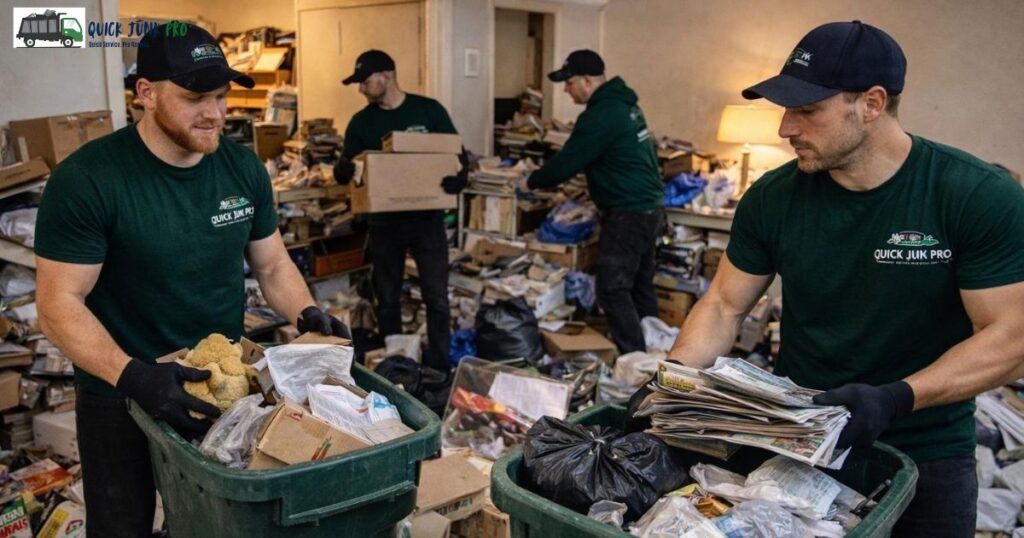
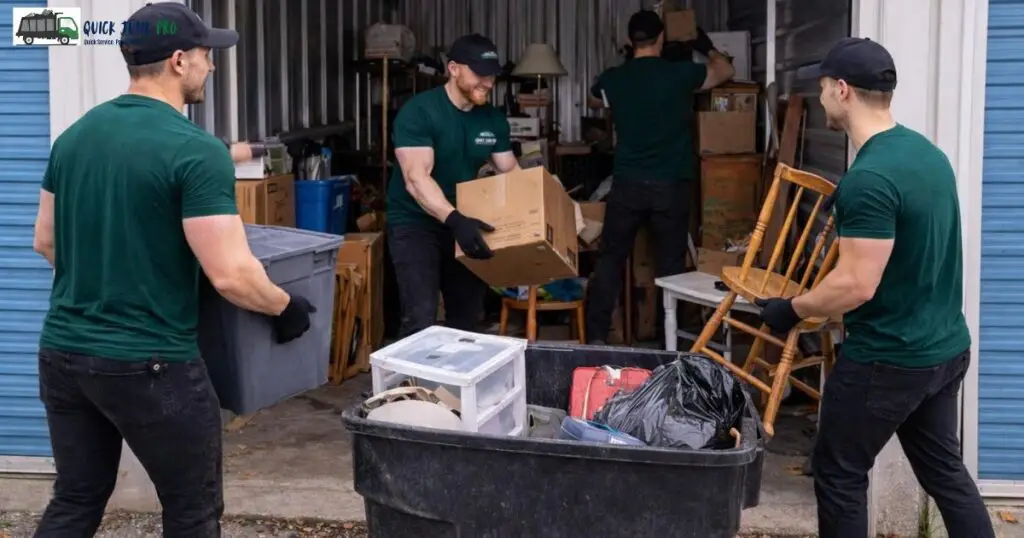
Private junk removal is the premium, convenience-focused option. You call, they show up (often same-day), they haul it away. It costs money, but you trade time and effort for speed and hassle-free pickup.
When Paid Removal Makes Financial Sense
Consider private removal if any of these apply:
You need the appliance gone today or tomorrow (city has a 14-day minimum)
You have multiple large items (sofa + fridge + dresser = one trip, one price)
The appliance is in a difficult location (basement, second-story, attic)
You physically cannot transport it yourself (no vehicle, mobility issues)
You’re moving soon and need immediate space clearance
Your item must be gone by a specific date (deadline pressure)
How Private Removal Companies Operate
The Standard Process:
- Call or request an online quote most companies give free phone estimates. Some send assessors (~30–60 min, sometimes $50–$100 refundable fee)
- Receive a price quote flat rate for the item + any add-on fees (stairs, distance, hazmat)
- Schedule a pickup window same-day, 24-hour, or multi-day options
- Confirm appointment most send text/email reminders
- Crew arrives & hauls they load, transport, and handle responsible disposal
- Pay on pickup day cash, credit card, or invoice
- Receive confirmation some provide recycling certificates
Top Junk Removal Services in Toronto (2026)
| Service | Typical Single Appliance Cost | Speed | Recycling Commitment | Contact |
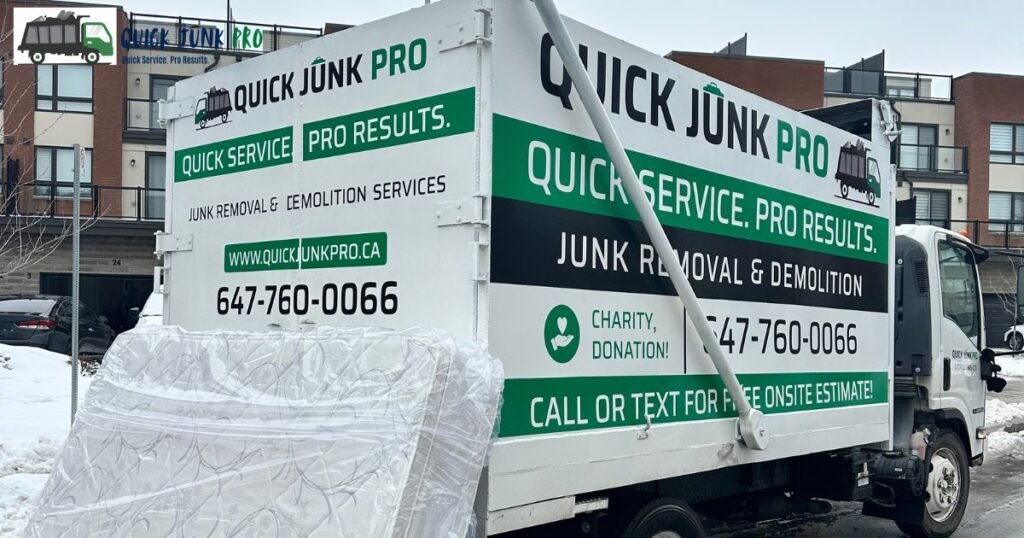
| Quick Junk Pro | Request a quote for pricing | Same-day or next-day availability may vary | Ask about recycling and responsible disposal options | Visit Quick Junk Pro online or request a quote |
Price Factors: Why Junk Removal Costs Vary
| Factor | Impact on Price |
| Item Size | Smaller appliances, such as microwaves, generally cost less to remove than larger items like refrigerators. |
| Accessibility | Ground-floor appliances with easy access may cost less to remove. Third-floor walk-ups, narrow staircases, and difficult access may increase labour costs. |
| Volume | Removing multiple appliances in one visit may offer better value than booking separate pickups. Contact Quick Junk Pro for a quote based on your items. |
| Timing | Standard appointments may have different pricing from urgent, same-day, or weekend bookings. Confirm availability and pricing with Quick Junk Pro before scheduling. |
| Distance from Depot | Pickup distance and service location may affect the total removal cost. Confirm any applicable travel charges when requesting your quote. |
| Hazardous Material Handling | Refrigerators and air conditioners may require special refrigerant handling. Ask Quick Junk Pro about any additional charges or disposal requirements before booking. |
Before confirming, ask about these:
Fuel/travel surcharge $25–$50 if you’re >10 km from their depot
Stair access fee $25–$50 per flight if basement or second floor
Hazmat handling Refrigerators with Freon: $25–$100 extra
Same-day premium Booking within 24 hours: +20–30% of base price
Weekend surcharge Saturday/Sunday appointments: +15–25%
Cancellation fee Cancel within 48 hours: $50–$100
Overweight fee Some charge per-pound for items over limits (rare)
Pro Tip: Always ask for the final, all-in price before confirming. Compare quotes from 2–3 companies minimum. Sometimes the cheapest isn’t best if service is slow or recycling practices are unclear.
Questions to Ask Before Booking
- “Is this price all-inclusive, or are there additional fees?”
- “Where exactly does my appliance go after pickup?”
- “Do you have recycling certifications or environmental partnerships?”
- “What’s your cancellation policy?”
- “Can you do same-day or do I have to wait?”
Pathway 3: Specialty E-Waste & Metal Recyclers
If you’re serious about environmental responsibility and proper hazmat handling, specialized recycling facilities are your best option.
ERA (Electronic Recycling Alliance) Largest GTA Provider
What They Do:
ERA specializes in electronics, appliances, and e-waste with certified hazardous material extraction.
| Detail | Information |
| Service Area | Greater Toronto Area (multiple locations) |
| Appliances Accepted | Fridges, freezers, dishwashers, washers, dryers, ACs, heat pumps |
| Cost | Free for most appliances (some specialty items $20–$50) |
| Pickup Option | Drop-off or request pickup for large loads |
| Certification | Certified for refrigerant extraction, hazmat handling, metals recovery |
| Contact | era.ca or call local depot |
Why Specialty Recyclers Matter:
Standard metal recyclers will crush and sort metals, recovering steel and aluminum. But appliances contain hazardous materials that can’t just be shredded:
- Refrigerants (Freon, HFC-134a, etc.) damage ozone layer if released
- Compressor oil toxic if leaked into groundwater
- Capacitors contain PCBs (polychlorinated biphenyls)
- Wiring insulation may contain heavy metals
Certified recyclers have specialized equipment to:
- Safely extract refrigerant
- Drain and recycle oils
- Remove hazardous components
- Only then shred and sort metals
This costs them more but protects the environment. Your responsibility ends when they take it; their responsibility is ensuring safe processing.
When to Use E-Waste Recyclers
- Old refrigerators (pre-2000) with Freon
- Air conditioners or heat pumps
- Appliances you suspect have hazardous materials
- You want certified, transparent recycling (not just “it gets melted down”)
- You want free or nearly-free disposal (better than paying $200 to private removal)
Disposal by Appliance Type Specific Guidance
Not all appliances are created equal. Here’s what you need to know for the big ones.
Refrigerators & Freezers
Fridges are the most heavily regulated appliance in Ontario. Here’s why and what to do.
Why Fridges Are Special
Refrigerators contain:
- Refrigerant (Freon in older models, HFC-134a or other compounds in newer ones)
- Compressor oil (hazardous if released)
- Insulation foam (may contain CFCs)
If refrigerant is released into the atmosphere, it:
- Damages the ozone layer
- Contributes to global warming
- Violates the Ontario Environmental Protection Act (OEPA)
Ontario law strictly prohibits putting fridges in trash, curbside garbage, or regular waste collection. Violators face fines of $500–$5,000.
Your Fridge Disposal Options (Ranked by Cost)
| Method | Cost | Timeline | Effort | Best For |
| City collection | Free | 7–14 days | Low (curbside placement) | Most situations. Works fine. |
| Drop-off depot | Free | Same-day | Medium (you transport) | You have a vehicle. I want it gone today. |
| E-waste recycler (ERA) | Free–$50 | 2–7 days | Low (drop-off or pickup) | You want certified recycling. |
| Paid removal | $150–$300 | Same-day to 48 hrs | Very low (they do everything) | You need speed. Multiple items. |
Pre-Disposal Fridge Preparation
- Unplug at least 24 hours before pickup
- Empty all food especially perishables; they’ll spoil
- Defrost if icy if freezer has frost buildup, defrost and place towels to catch water
- Leave doors open or at least unlocked so handlers can move it (don’t seal it shut)
- Drain water if there’s a drain plug, use it
- Clean the interior optional, but respectful to handlers
- Don’t drain refrigerant yourself this is illegal and dangerous; leave it to certified professionals
MYTH BUSTER: You do not need to drain refrigerant before disposal. Attempting it yourself violates Ontario environmental law and risks your health. Certified handlers will do it safely.
Real Talk: City collection workers and professional removers are trained to extract refrigerant before recycling. It’s their job, they have the equipment, and it’s the law.
Washers, Dryers & Ranges
These are standard oversized metal items from Toronto’s perspective. They’re accepted at city collection, drop-off depots, and paid removal services without extra fees or hazmat concerns.
Washer & Dryer Disposal
| Disposal Method | Cost | Timeline | Best For |
| City collection | Free | 7–14 days | Can wait. Default choice. |
| Drop-off depot | Free | Same-day | You have a truck. |
| Paid removal | $100–$250 | 1–48 hours | You need speed or multiple items. |
| Donation | Free | 3–7 days | Working units (Salvation Army, Habitat). |
| Sale | $200–$600 | 5–14 days | Newer models, good condition. |
Preparation Before Pickup:
- Drain water from the washer drum (run a short cycle with no items, or use drain plug)
- Remove any items stuck in the drum or seal
- If it has an inlet hose, you can leave it connected (removers will disconnect)
Pro Tip: Working washers and dryers are highly sought-after for resale or donation. If yours is functional, posting on Kijiji or Facebook Marketplace often sells within 1–2 weeks for $250–$500.
Stove/Oven Disposal
| Disposal Method | Cost | Timeline | Best For |
| City collection | Free | 7–14 days | Electric stoves, can wait. |
| Drop-off depot | Free | Same-day | You have a truck. |
| Paid removal | $150–$300 | 1–48 hours | Gas stove, need speed. |
Special Note Gas Stoves:
If you have a gas stove, you have two options:
Option A: Turn off the gas at the source (wall valve or meter) if you know how. Leave the connection for removers to handle.
Option B: Leave the gas connected. Tell the removal crew it’s gas. They’re trained to disconnect safely.
Do not attempt to disconnect gas yourself if you’re unsure. Gas leaks are dangerous.
Dishwashers & Microwaves
These are smaller appliances. City collection may accept them, but size limits vary. Call 311 when scheduling to confirm whether your specific item qualifies for curbside pickup.
Backup Options:
- Drop-off depot (free, self-transport)
- Bundle them with a larger item in paid removal (better value on bulk)
- Donate if working (charities accept)
- Sell on Kijiji if newer/good condition
Step-by-Step How to Dispose of Your Appliance (Complete Process)
Follow this process to avoid confusion, delays, and fees.
Step 1: Assess Your Appliance & Choose Your Path
Ask yourself these questions:
Question 1: Does it still work?
- Yes → Go to donation or resale section (skip to that section)
- No → Continue to Question 2
Question 2: How soon do you need it gone?
- ASAP (same-day, within 48 hours) → Paid removal is your answer
- Within 2 weeks → City collection or drop-off depot
- No rush → You have all options; choose the cheapest (city collection)
Question 3: Can you physically transport it?
- Yes, I have a truck/van → Drop-off depot (free, fastest)
- No → City collection (free, curbside) or paid removal (costs money, they haul)
Question 4: How many items?
- Just one appliance → City collection is cheapest ($0 vs. $150–$300 paid)
- Multiple items (fridge + sofa + dresser) → Paid removal is better value (bulk discount, one trip)
Step 2: Prepare the Appliance (2–3 Days Before)
Universal Prep (All Appliances):
- [ ] Unplug from the electrical outlet 24 hours in advance
- [ ] Wipe interior to remove dust, debris, odors
- [ ] Check doors ensure they open and close freely
- [ ] Remove loose parts detachable shelves, drawers, handles (so they don’t fall during transport)
- [ ] Clear surroundings move chairs, boxes, anything in the way so handlers have easy access
Fridge/Freezer Specific:
- [ ] Empty all food (especially perishables)
- [ ] Defrost if icy place towels underneath to catch water
- [ ] Leave doors open (or at least unlocked)
- [ ] Don’t drain refrigerant yourself
Washer/Dryer Specific:
- [ ] Drain water run a short empty cycle, or use drain plug
- [ ] Remove items from drum/seals
- [ ] Leave inlet hoses connected (handlers can disconnect)
Stove/Oven Specific:
- [ ] Turn off gas at the wall valve (if you know how; optional)
- [ ] Clear stovetop of any items
- [ ] Tell removal crew it’s gas if you haven’t disconnected
Placement:
- Place at the curb (not on sidewalk, not blocking neighbors)
- Ensure easy access for loading
- If using drop-off, load into your vehicle carefully (use straps if needed)
Step 3: Choose Your Method & Schedule
Option A: City Collection
- Call 311 or visit toronto.ca/oversized
- Provide your street address
- Describe the appliance
- Receive a confirmed collection date (7–14 days)
- Note the date on your calendar
Option B: Drop-Off Depot
- Visit toronto.ca/drop-off-depots
- Find your nearest location & check hours
- Load appliance into vehicle
- Drive to depot (within 1–2 days)
- Unload at designated area
Option C: Paid Removal
- Provide address and item description
- Get a quote (ask for all-in price, no hidden fees)
- Choose appointment window (same-day, next day, specific time slot)
- Confirm appointment via text/email
Step 4: Prepare for Pickup Day
For City Collection:
- Place appliance at curb by 6:00 a.m. on scheduled date
- Ensure it’s accessible (not behind gate, not blocking sidewalk)
- Be home during 6 a.m.–6 p.m. window (optional, but good to monitor)
For Paid Removal:
- Have appliance in easy-to-access location
- Move any obstacles (cars, boxes, other items)
- Have payment method ready (cash, card, or check)
- Open gate/garage access if needed
Step 5: Confirm Pickup & Track Disposal
City Collection:
- Appliance should be picked up on the scheduled date
- If not picked up by end of day, check next day or call 311 again
Paid Removal:
- Most companies text 24 hours before (“We’ll see you tomorrow”)
- Some text 15–30 minutes before (“We’re 20 mins away”)
- Be available during the scheduled window
- Ask crew where appliance is going (certified recycler, scrap metal facility, etc.)
- Request a receipt or confirmation email if you want documentation
Pro Tip: If using a company that offers “responsible recycling” tracking, ask for the facility name. Reputable companies can tell you exactly where your appliance goes.
Cost Breakdown: Free vs. Paid Removal (2026 Pricing)
Let’s be real about money. Here’s what you’ll actually spend.
Option 1: Free City Collection
| Cost Component | Amount |
| Pickup fee | $0 |
| Hidden costs | $0 (included in property taxes) |
| Time cost | ~30 min (prep + curbside placement) |
| Wait time | 7–14 days |
| Actual out-of-pocket | $0 |
When it wins: You have time. You don’t mind waiting. You want zero expense.
Option 2: Paid Private Removal
Typical Costs (2026):
| Appliance Type | Typical Cost | Add-Ons | Total Range |
| Fridge | $150–$250 | Freon handling (+$25–$50) | $150–$300 |
| Washer OR Dryer | $100–$150 | Stairs (+$50) | $100–$200 |
| Washer + Dryer (pair) | $180–$250 | $180–$250 | |
| Stove/Range | $150–$300 | Gas disconnect (+$25–$50) | $150–$350 |
| Dishwasher | $80–$150 | $80–$150 | |
| Microwave | $60–$100 | $60–$100 | |
| 3–5 items (bulk) | $300–$600 | $300–$600 |
Common Add-On Fees:
| Fee Type | Amount | When It Applies |
| Stairs/difficult access | +$25–$75 | Basement, 2nd+ floor, narrow passage |
| Same-day appointment | +$25–$50 | Booking within 24 hours |
| Distance surcharge | +$20–$50 | >10 km from depot |
| Weekend premium | +$20–$50 | Saturday/Sunday pickup |
| Hazmat handling | +$25–$50 | Fridge with Freon, AC unit |
Actual All-In Costs (Examples):
- Single fridge, ground floor: $150–$200
- Single fridge, 2nd floor walk-up: $200–$300
- Fridge + stove, ground floor: $300–$400
- Fridge + washer + dryer, bulk rate: $350–$450
- Same-day emergency fridge removal: $200–$350
Honest Cost Comparison: When Paid Removal Wins
| Scenario | City Collection Total | Paid Removal Total | Time Saved | Value Proposition |
| 1 fridge, can wait | $0 + 14 days | $150–$250 | N/A | City wins (save $250) |
| 1 fridge, need today | Not available | $150–$250 (same-day) | Immediate | Paid required (only option) |
| Fridge + sofa, can wait | $0 + 2 calls + 14 days | $300–$400 | 1 trip instead of 2 | Paid wins (convenience, time) |
| Fridge + washer + dryer + sofa | $0 + 3 calls + 14 days | $400–$550 | Multiple trips → 1 trip | Paid wins (bulk discount applies) |
| Moving out, 5–7 items, deadline | $0 + multiple pickups + 14 days | $600–$1,000 | Guaranteed deadline | Paid wins (reliability, control) |
The Bottom Line:
If you have time and one item, city collection is unbeatable ($0). If you have multiple items, a deadline, or need same-day removal, paid removal saves time and frustration and time has a dollar value too.
Toronto’s Rules, Restrictions & Legal Requirements
Know the law. Fines are steep.
What You CANNOT Do
Put appliances in your regular garbage or blue recycling bin
- Appliances don’t fit in standard collection trucks
- They damage collection equipment
- Fine: $500–$1,000 (per infraction)
Leave appliances curbside without scheduling city pickup
- Toronto bylaw requires prior approval
- An unsched appliance can be tagged and removed at your expense (~$200–$500)
- Fine: $500–$1,500
Dump appliances in alleyways, parks, ravines, or public spaces
- This is illegal dumping under the Environmental Protection Act (OEPA)
- Fine: $1,500–$5,000 (per item)
- You can be held liable for cleanup costs ($500–$2,000+)
Drain refrigerant yourself or allow untrained persons to do so
- Violates OEPA
- Releases ozone-damaging chemicals
- Fine: $1,000–$5,000
- Plus potential criminal charges for environmental harm
Leave appliances on the curb permanently (no pickup scheduled)
- City can tag it after 3–7 days
- Can eventually remove and charge you for disposal ($200–$500)
What You CAN Do
Schedule free city collection 7–14 days, absolutely legal
Take to city drop-off depots free, same-day, no wait
Hire licensed removal company professional, responsible disposal
Donate or sell appliances that still work legal, encouraged
Take to certified e-waste recyclers (ERA, etc.) free or low-cost
Why Toronto Regulates Appliances So Strictly
- Space: Appliances take up massive landfill space. A fridge is 30–50 cubic feet; one landfill can only hold so many.
- Materials: ~80% of appliance weight is recoverable material steel, copper, aluminum. These are valuable; wasting them is environmentally and economically irresponsible.
- Hazardous Substances: Appliances contain:
- Refrigerants (ozone-layer damaging)
- Oils (contaminate groundwater)
- Capacitors (PCB-containing)
- Heavy metals (lead, mercury in old electronics)
- If buried in landfills, these leach into soil and water.
- Circular Economy: Toronto aims to recover materials, not waste them. Responsible disposal = recycled materials → new products → less raw material extraction → less environmental impact.
Toronto’s Appliance Recycling Impact (2024 Data):
- 100,000+ appliances collected annually
- ~80,000 tons of material recovered
- ~$X million in scrap material value [FLAG: user to provide local data]
- Jobs created in sorting, processing, and sales
Better Alternatives: Donate or Sell Your Appliance
If your appliance still works or could work with minor repair — disposal might be wasteful. Here’s how to give it a second life.
When Donation or Resale Makes Sense
It turns on and runs (even if cosmetically worn)
You’re upgrading (old fridge works but you want a newer, more efficient model)
You’re short on cash and can sell it
You care about waste reduction and want to keep it out of the recycling stream
Someone else needs an affordable appliance
Real Talk: A working 10-year-old fridge has 5–10 years of life left. Recycling it immediately is wasteful when someone could use it.
Option 1: Sell Your Appliance
Best Platforms for 2026:
| Platform | Audience Size | Best For | Listing Fee | Typical Price |
| Facebook Marketplace | Very large (local + regional) | All appliances, quick sales | FREE | Fridge: $150–$400; Washer: $200–$500 |
| Kijiji | Large (local focus) | Appliances, Toronto-based buyers | FREE | Same as Facebook |
| Craigslist | Older, reliable | Bargain hunters, bulk buyers | FREE | $100–$300 |
| OfferUp / Letgo | Growing (mobile-first) | Gen-Z buyers | FREE | Slightly lower than Facebook/Kijiji |
| Local Facebook groups | Community-based (neighborhood) | Trusted local sales | FREE | Varies; often negotiable |
Realistic Appliance Resale Prices (2026):
| Appliance | Age | Condition | Price Range |
| Fridge | 5–10 years | Good | $150–$350 |
| Fridge | 10+ years | Fair | $75–$150 |
| Washer | 5–10 years | Good | $150–$400 |
| Dryer | 5–10 years | Good | $100–$300 |
| Washer + Dryer set | 5–10 years | Good | $300–$700 |
| Stove/Range | 5–10 years | Good | $150–$400 |
| Dishwasher | 5–10 years | Good |
How to Sell Successfully:
Step 1: Take photos
- Front view (full, clean)
- Side view (shows profile)
- Interior (open doors, show inside)
- Any damage or wear (be honest)
- Closeup of serial number (proves authenticity)
Step 2: Write an honest description
- Age and brand
- Condition (e.g., “Runs great, small dent on side, door handle slightly loose”)
- Features (ice maker, delay start, etc.)
- Any quirks (“Ice maker doesn’t work but fridge runs perfectly”)
- Why you’re selling (“Upgrading to new model”)
Step 3: Price strategically
- Price slightly high (leave room for negotiation)
- Research comparable listings to anchor price
- Be realistic (don’t overprice by 50%)
- Consider negotiation expect 10–20% haggling
Step 4: Arrange logistics
- Delivery? Only if you have a truck. Otherwise: “Local pickup required”
- When? “Available for pickup this weekend” or “Flexible times”
- Payment? Cash preferred, or Interac e-transfer
- Inspection? “Buyer can inspect before payment”
Step 5: Collect payment & finalize
- Cash in hand before they take it (safest)
- Interac e-transfer (after pickup, buyer confirms it works)
- Keep photos (proof of condition if disputes arise)
Pro Selling Tips:
- List during weekday evenings (7–9 p.m.) when people browse
- Cross-post to 2–3 platforms for more visibility
- Respond to messages quickly (within 1 hour = more sales)
- Be flexible on price in negotiation (small discount = faster sale)
- For bulky items: “Buyer handles transport” saves time and liability
Option 2: Donate Your Appliance
Best Charities & Organizations (2026):
| Organization | Appliances Accepted | Condition Required | Pickup Available? | Tax Receipt? | Contact |
| Salvation Army | Fridges, washers, dryers, stoves | Working only | Yes (many locations) | Yes | Local store or salvationarmy.ca |
| Habitat for Humanity ReStore | Fridges, appliances (working) | Like-new to good | Yes | Yes | habitat.ca/restore |
| Buy-Nothing Groups (Facebook) | Any appliance (working or for parts) | Any condition | Varies (community pickup) | No | Search “Buy Nothing [Your Neighborhood]” |
| Furniture Banks (nonprofits) | Appliances for low-income families | Working or refurbished | Yes | Yes | Call 211 or search “Toronto furniture bank” |
| Working Centre Toronto | Appliances, furniture, electronics | Working preferred | Yes | Yes | (416) XXX-XXXX |
| Goodwill Ontario | Some appliances (refrigerators, washers) | Working | Limited | Yes | goodwillontario.ca |
Donation Perks:
Tax deduction Most charities issue receipts; you can deduct fair market value on taxes
Pickup service Habitat, Salvation Army pick up from your home (free)
Community help Your appliance goes to someone who needs it
No hassle Charity handles everything; you just sign off
Environmental Extends product life, reduces waste
Donation Reality Check:
Most charities accept working appliances only
If your fridge doesn’t turn on or door is broken, they’ll decline
Always call first before arranging pickup confirm acceptance
If They Decline:
Broken appliances are still valuable to metal recyclers. Drop off at a city depot or use ERA (often free). Don’t dump it illegally.
The Environmental & Social Impact
Why does it matter where your appliance goes?
What Happens to Recycled Appliances: The Complete Journey
Stage 1: Collection
- City crew or removal company picks up appliance
- Transported to certified recycling facility
Stage 2: Hazmat Extraction
- Refrigerant drained (if fridge/AC)
- Compressor oil collected
- Capacitors removed (contain PCBs)
- All hazardous materials contained and incinerated or neutralized
Stage 3: Mechanical Separation
- Appliance is disassembled
- Metal components separated from plastics, glass, wiring
- Wiring stripped for copper recovery
Stage 4: Metal Recovery
- Steel: ~60% of fridge weight
- Crushed and sent to steel mills
- Melted and reused in new appliances, cars, construction
- Recycled steel = 60% less energy than virgin steel
- Aluminum: ~10% of fridge weight
- Highly valuable (aluminum recycling is profitable)
- Reused in beverage cans, car parts, new appliances
- Recycled aluminum = 95% less energy than new aluminum
- Copper: ~5% of fridge weight
- Most valuable component (precious metal)
- Reused in wiring, electrical components, new appliances
- High scrap value (why metal recyclers pay for copper)
Stage 5: Electronics Recycling
- Circuit boards, motors, and transformers processed
- Precious metals (gold, silver) extracted from circuit boards
- Remaining materials safely disposed
Stage 6: Waste Disposition
- Non-recoverable residue (~20% of appliance weight) safely landfilled
- Hazardous materials incinerated in certified facilities
- Plastic and glass components sorted for recycling or disposal
The Real Impact Numbers
One refrigerator yields approximately:
- 90 lbs of steel (reused in new products)
- 20 lbs of copper (valuable, recovered completely)
- 15 lbs of aluminum (reused in cans, cars)
- Freon: Safely extracted and incinerated (prevents ozone damage)
- Total material recovered: ~80% of original weight
Toronto’s 2024 Appliance Recycling Program Impact:
- 100,000+ appliances collected via city programs
- 80,000 tons of material recovered for reuse
- ~$1.5 million in scrap material value recovered
- 500+ jobs in sorting, processing, and sales across the recycling sector
Environmental Benefits
| Benefit | Impact |
| Energy saved (recycled aluminum vs. virgin) | 95% less electricity needed |
| Energy saved (recycled steel vs. virgin) | 60% less electricity needed |
| Landfill space preserved | 1 fridge = ~50 cubic feet of landfill avoided |
| Water saved | Recycling uses 90% less water than mining new metal |
| CO2 prevented | Recycling vs. mining = ~100 lbs CO2 per fridge |
| Ozone protection | Proper refrigerant handling = no ozone damage |
Social Benefits
Job creation Sorting, processing, sales, refurbishment
Affordability Refurbished appliances sold via charities make homeownership accessible
Skill development Training programs in repair, refurbishment for low-income workers
Circular economy Materials stay in use; less raw material extraction needed
Common Mistakes & Insider Tips from Experienced Toronto Residents
Avoid these pitfalls. Learn from people who’ve done this before.
Mistake #1: Waiting Until the Last Minute
What Happens:
You’re moving in 3 days. Just realized your fridge needs to go. City collection = 7–14 day wait. You panic.
Why It’s a Problem:
- Forced into expensive paid removal ($250+) when free option was available
- Last-minute fees (same-day premium = +30%)
- Stress, rushed decisions
The Fix:
Schedule removal 2–3 weeks before your move-out or deadline. Even if you don’t need it gone immediately, you’ll have time to:
- Compare options and prices
- Choose the cheapest method
- Avoid panic and emergency fees
Pro Tip: Toronto’s city collection is busiest May–September (moving season). Schedule early if moving in summer.
Mistake #2: Not Draining Water Before Pickup
What Happens:
Washer, dishwasher, or AC unit still holds water. Delivery driver discovers this mid-transport. Water leaks. Mold and smell develop inside the truck. Recycler rejects the item as “contaminated.”
Why It’s a Problem:
- Item won’t be accepted by recyclers
- You’re asked to remove it again (extra pickup request)
- Delay in your disposal timeline
- Wasted effort
The Fix:
24 hours before pickup:
- Run a short cycle with no items (washer/dishwasher)
- Or manually drain using the outlet plug (if accessible)
- For window AC: tilt slightly to drain condensation
- For fridges: defrost if icy and place towels underneath
Pro Tip: Place a towel under drain valves in case water spills.
Mistake #3: Assuming Your Appliance is “Non-Recyclable”
What Happens:
You’ve heard urban legends like “They just throw it in the landfill” or “Nobody wants old metal.” So you dump your old fridge illegally in an alley instead.
Reality Check:
- ~80% of appliance weight is recoverable material
- Aluminum, steel, and copper are always valuable
- Even completely broken appliances have scrap value
- Toronto’s city system has handled appliances responsibly for 20+ years
The Fix:
Trust the process. City collection, drop-off depots, and certified recyclers all recover material and handle hazmat properly. Your responsibility ends when they pick it up; their responsibility is proper processing.
Mistake #4: Listing a Broken Appliance as “Working” to Sell It
What Happens:
You post on Kijiji: “Fridge works great, needs compressor.” Buyer shows up, discovers the compressor has failed for 2 years and it’s basically non-functional.
Buyer’s reaction: Refuses to pay, wastes everyone’s time.
The Fix:
Be upfront and honest:
- “Compressor failed; perfect for DIY repair or parts”
- “Runs but ice maker doesn’t work”
- “Cosmetic damage but full function”
Honest listing attracts the right buyer (DIYers, appliance repair people) and sells faster. A $200 sale today beats holding it for months hoping to trick someone.
Insider Tip #1: Combine Multiple Items for Bulk Pricing on Paid Removal
If you have a fridge + stove + dresser, one removal truck hauls all three.
Pricing Example:
- Single fridge alone: $200
- Single stove alone: $200
- Single dresser alone: $150
- Total if separate: $550
But combined: Often $350–$400 (bulk discount applied)
The Fix:
When calling for quotes, mention all items: “I have a fridge, stove, and dresser. What’s your bulk rate?”
Companies know multi-item pickups are more efficient. You’ll save $100–$200.
Insider Tip #2: Stack City Pickups for Multiple Items
You can request city pickup for appliances and furniture in one call.
One request = multiple items collected.
Example: Call 311, say “I have a fridge, stove, and old sofa.” City crew comes once, takes everything. One 14-day wait instead of three separate waits.
Insider Tip #3: E-Waste Recyclers Often Beat Private Removal on Price
Pricing comparison:
- ERA (e-waste recycler): Free–$50 for most appliances
- Local junk removal: $150–$300
If you don’t need same-day pickup, call ERA first. You might save $100–$200 and get certified recycling.
Insider Tip #4: Buy-Nothing Groups Are Hidden Goldmines
Search Facebook for “Buy Nothing [Your Neighborhood].”
These groups are local, free, and fast. Post your appliance, get 5–10 responses in 2 hours. Buyer arranges pickup within 24–48 hours. You’re done.
Why it works:
- No shipping (local only)
- No fees (free = no friction)
- Community vibe (people help each other)
- Same-day to next-day pickup
Best for working appliances. Non-working? Post “for parts” and it still sells.
FAQs
Is appliance disposal free in Toronto?
Yes if you use city collection or drop-off depots. City collection costs $0 (included in taxes) and takes 7–14 days. Drop-off depots are also free and immediate if you have a vehicle. Paid private removal costs $100–$400; e-waste recyclers are often free or $0–$50. Donation is free if your appliance works.
How long does city appliance collection take?
Typically 7–14 days from the date you call 311 or book online. Peak season (May–September) may push closer to 14 days. Drop-off depots are immediate if you can transport it yourself. Paid removal is same-day to 48 hours.
What if my refrigerator has Freon or my appliance is very old?
Never attempt to drain Freon yourself; it’s illegal in Ontario and dangerous. Old fridges often contain Freon (CFC-12); newer ones use HFC refrigerants. Either way:
- City collection: Handles it safely (included)
- Drop-off depots: Handles it safely (included)
- Certified recyclers (ERA): Handles it safely (included or $20–$50 fee)
- Paid removal: May add $25–$50 for Freon extraction
Let the professionals handle it.
Can I donate an appliance that doesn’t work?
Most charities decline non-working appliances. Call before dropping off to confirm. Some nonprofits accept broken items for parts or volunteer refurbishment. If rejected, take it to a metal recycler (ERA, city depot, or paid removal). Broken appliances still have scrap metal value.